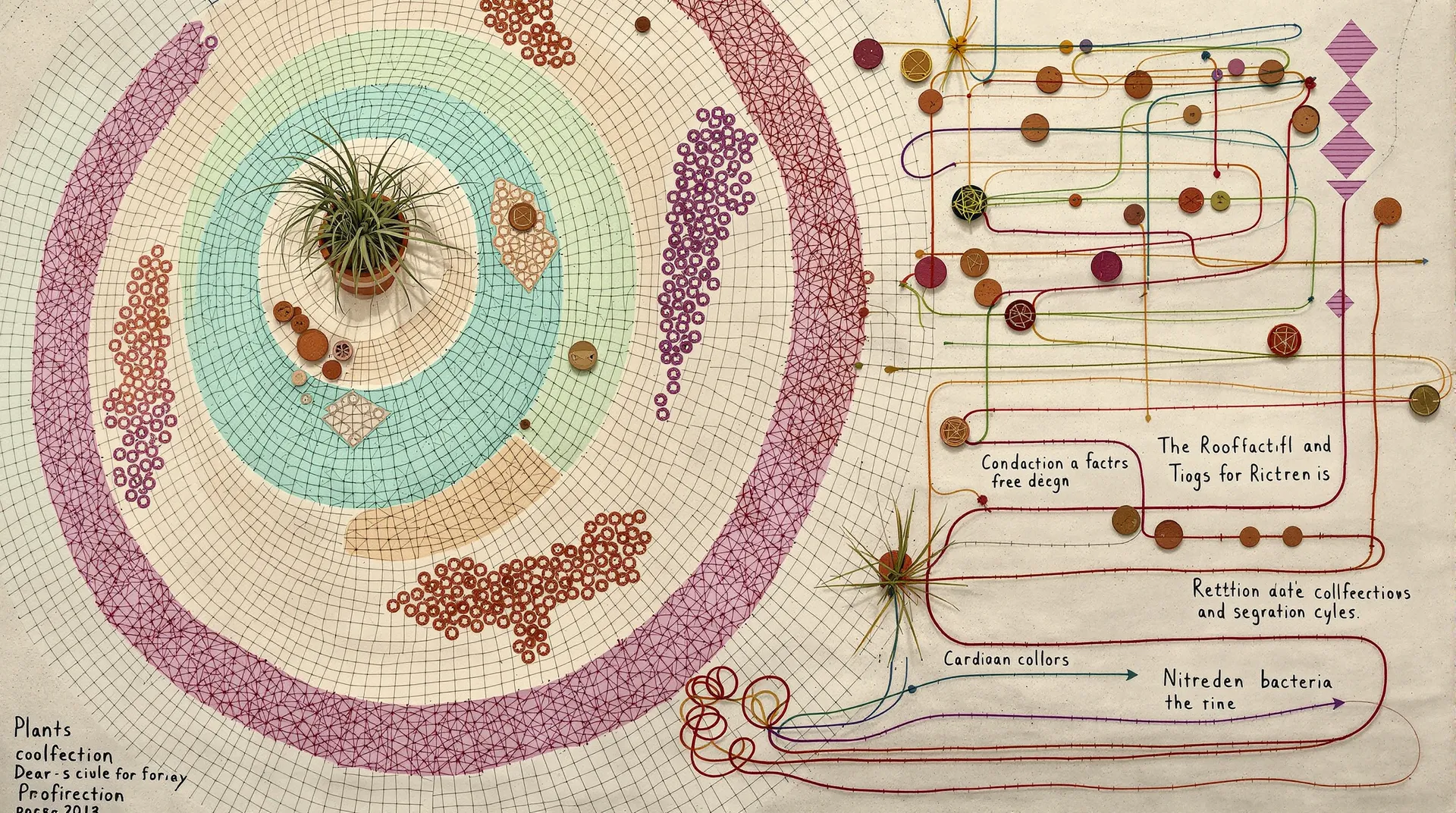
Isolation functions like a kiln firing ceramic—high temperature strengthens bonds whilst preventing moisture exchange. Private moments cure under pressure, becoming dense and impermeable. The divide hardens into something load-bearing. We build cities assuming separation creates stability. Yet the kiln itself becomes the trap.
Urban farming exposes this fragility. When someone cultivates vegetables on a rooftop, they're creating conductive pathways between systems we've insulated from each other. Soil microbes negotiating with plant roots, pollinators crossing balconies, rainwater absorbed rather than channelled—each reveals metabolic intelligence we've interrupted. The wild doesn't require wilderness. It requires permission to participate in biochemistry.
I recognise this from earlier work—projects like canopy and petpujs (prayasabhinav.net/works.pdf)—embedding ritual objects in urban spaces, pursuing something I couldn't articulate: hunger to dissolve boundaries through patient interventions. A tomato plant in recycled guttering becomes rebellion against the fiction that food arrives from elsewhere, that cities consume without producing, that habitation and ecology occupy separate registers.
The city reveals itself not as dead infrastructure requiring constant importation, but as constrained participant in biological networks desperate for reconnection. When natural circuits close—organic waste feeds soil feeds plants feeds people who generate waste—exponential benefits ripple through the system. Threshold crossings where the whole exhibits behaviours impossible for isolated components. This is why isolation registers as trauma: organisms know they've been severed from exchange.
We've designed settlements to maximise severance. Private property draws lines through continuous ecologies. Zoning separates residential from agricultural from commercial. Hygiene standards pathologise bacteria required for fermentation, decomposition, fertility. We've ensured loops never close, waste flows away rather than returning. Urban farming exposes these as design choices.
The wild embedded in unnatural completes circuits we didn't realise were open. Nitrogen cycles locally. Carbon sequesters in raised beds. Knowledge about seasonal rhythms circulates through communities. These reconnections require recognising cities as ecological entities.
Can we design settlements where boundaries between cultivation and ecosystem dissolve without sterile uniformity? What becomes possible when we stop treating urban space as insulated? How might cities transform if we measured vitality by circuits we permit?