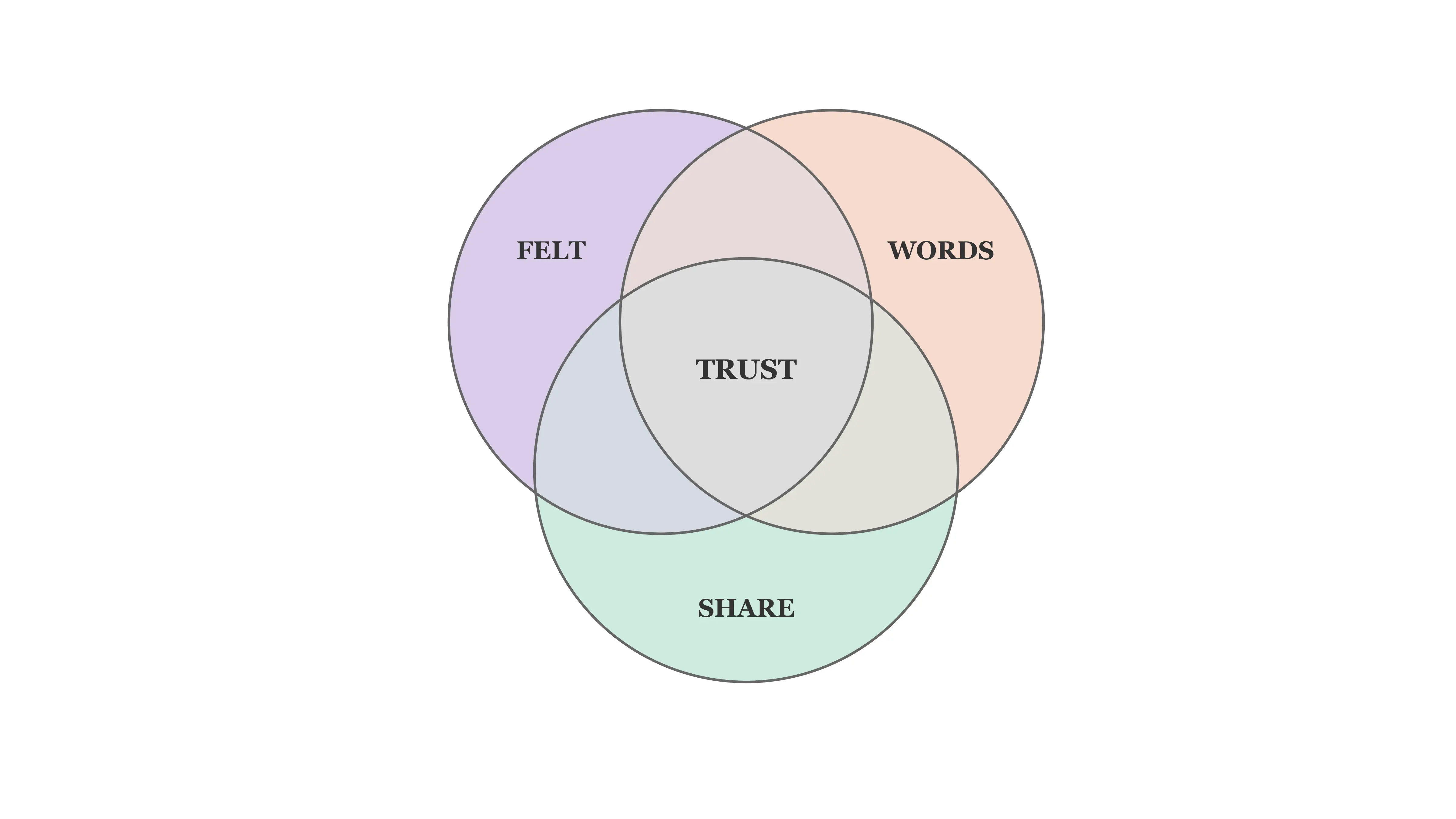
We are trying to figure coherent ways to communicate vague ideas constantly. Our experience is vague but it can lead to sharp insights. How does this happen? Our conscious faculties constantly translate our vague experience to language to able to socially relay it and get by. But we sometimes talk to our siblings or other lifelong friends without this translation because we know that they can understand and unpack the inherent vagueness in whatever we are putting out there.
Vagueness functions like submerged icebergs—seven-eighths of meaning sits below the waterline, invisible yet bearing the weight of what appears above. When you speak to someone who shares your experiential substrate—someone who's metabolised similar textures of living—vagueness becomes compression, signalling through abbreviated gestures what would otherwise require encyclopaedic unpacking.
Jazz musicians synchronise through dropped beats and polyrhythmic syncopation. One plays around the downbeat whilst another leans into it, and what emerges is neither chaos nor strict adherence but a third thing revealing itself only to those who've internalised the same rhythmic logic. Vagueness isn't deficiency—it's how the system generates meaning through variation.
My recent posts about design critique address a related phenomenon. When designers deploy terms like "intuitive" or "seamless" without defining them, they're transmitting vague signals into a space that lacks shared experiential substrate. The reviewer receives only waterline fragments without access to the seven-eighths submerged structure. So critique defaults to impression because the vagueness in the design concept produces vagueness in the critical response.
The cycle perpetuates: undefined design concepts produce undefined outcomes produce undefined critique. Each link amplifies the previous lack of precision. Unlike siblings who unpack each other's compressed signals through decades of calibrated understanding, designers and critics rarely share sufficient experiential substrate to translate professional vagueness productively.
The difference between rich vagueness and hollow vagueness sits in whether the receiver possesses adequate perceptual apparatus to reconstruct what the sender compressed. Which contexts reward tight specification and which benefit from deliberately loose signalling? Can we distinguish between vagueness that compresses shared understanding and vagueness that papers over absence of understanding?
#DesignCritique #Communication #Vagueness #ProfessionalDiscourse #DesignEducation #TechPhilosophy #InterpersonalKnowing #ExperientialSubstrate #DigitalCulture #Semiotics