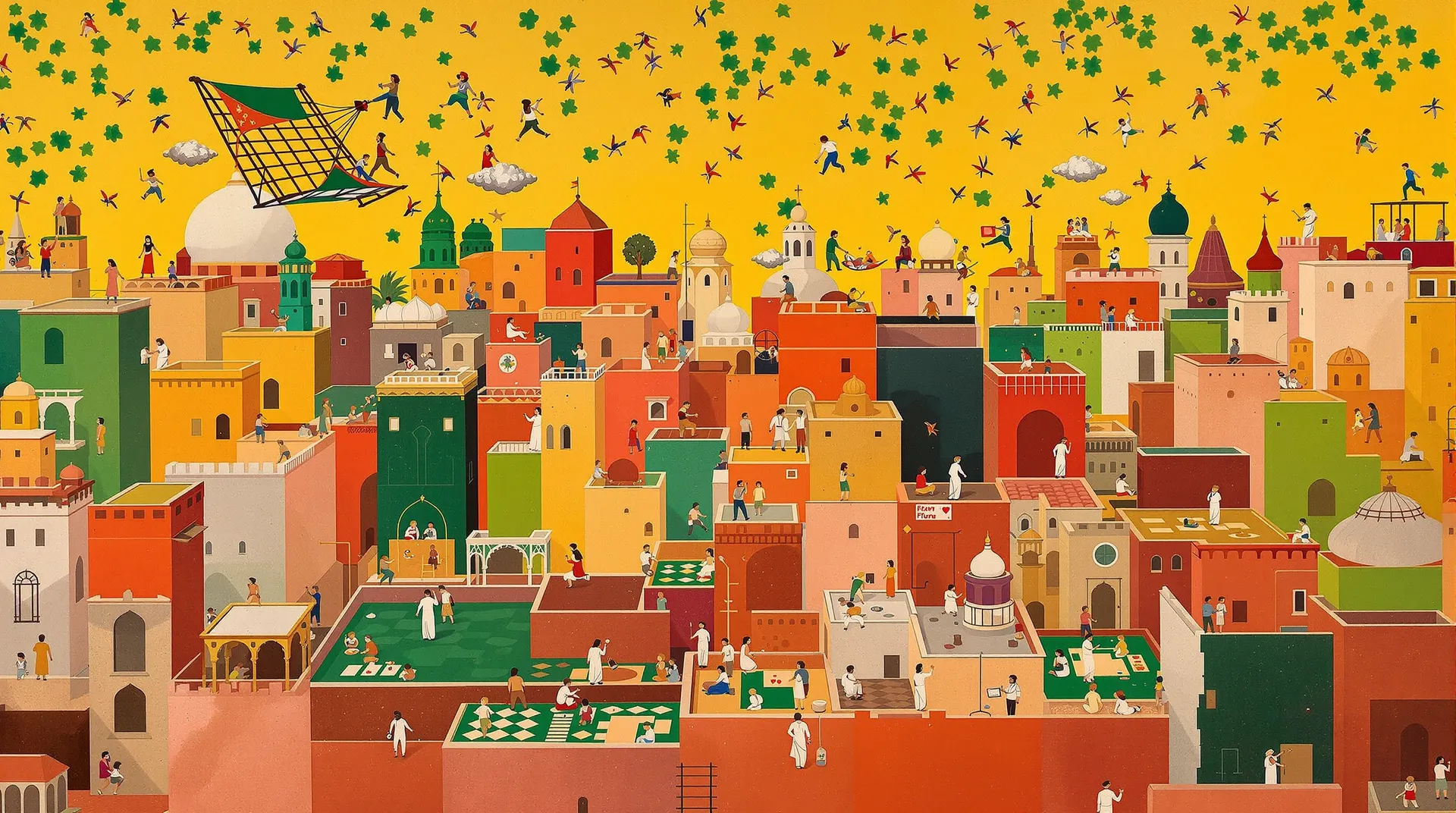
Public art taught me that cities are unfinished manuscripts, waiting for annotation. Every blank wall, every forgotten corner holds potential for intervention. Not vandalism, but dialogue. A conversation between what exists and what could exist. The city becomes a canvas where permission is optional and participation is inevitable.
Games revealed themselves as laboratories for impossible physics. Spaces where gravity negotiates, where death is temporary, where resources multiply through sharing. Players willingly suspend disbelief and rationality, embracing rule sets that would collapse any economy outside their boundaries. They queue for hours to enter worlds where failure is celebrated, where the absurd becomes strategic.
Both practices converge on world-building as primary creative act. Not the grandiose construction of entire mythologies, but the intimate craft of making reality slightly stranger. A chalk outline that suggests a giant slept here. A game mechanic that turns walking backwards into currency. Small tears in the fabric of the expected, through which other possibilities leak.
The activist impulse and the playful impulse aren't opposites - they're accomplices. Activism without play becomes didactic, a finger wagging at the world. Play without activism becomes escapism, a retreat from consequence. But when they collaborate, something electric happens. The serious work of reimagining becomes joyful. The joyful work of creating becomes political.
Urban happenings operate on this frequency. They're neither purely protest nor purely performance. A flash mob that reorganises traffic patterns makes visible the arbitrary nature of flow. A treasure hunt through bureaucratic buildings transforms navigation into critique. These interventions don't demand revolution