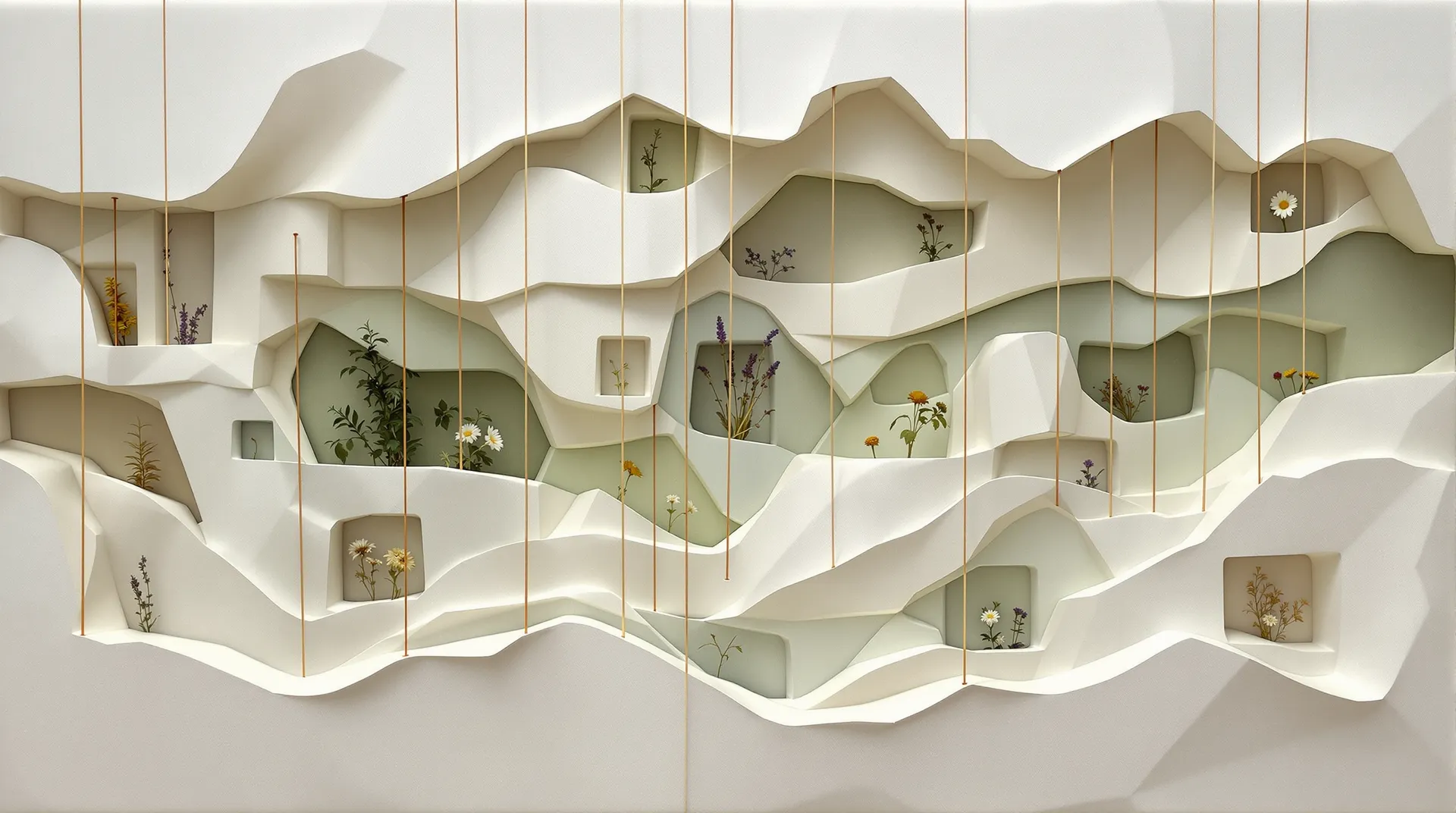
Imagine a vast public park in a city somewhere. Scores of individuals somehow maintain secret personal gardens within this huge public park. They've established relationships with specific plants, watering them when needed, paying attention, watching them grow over years. The end experience: they have personal gardens to themselves, nested within a broader public park that everyone can access.
Now change the analogy of the public park and replace it with an analogy of a public library. Remarkably, not too many things change. The experience is not dependent on ownership—this is the key fact worth examining.
We operate under inherited assumptions treating stewardship and ownership as synonymous. If you care for something deeply, surely you must own it. Yet these garden-keepers reveal a different possibility. Attentiveness doesn't require title deeds. Care exists without possession. Devotion flourishes when the land beneath belongs to everyone and no one simultaneously.
This arrangement produces what our systems struggle to recognise: the commons that permits intimacy. Public infrastructure typically forces a binary—either everything belongs equally to everyone, or we subdivide and privatise. The park gardeners demonstrate this binary collapses. They cultivate specific relationships whilst the park remains genuinely public, developing specialised knowledge whilst never preventing others from enjoying the same space differently.
Contemporary digital platforms claim to understand this, building "your library" and "your playlist," but they've misunderstood the mechanism. They've created personalisation illusions through ownership metaphors. What the park gardeners know: relationship depth comes not from possession but from sustained attention within genuinely shared space. The platform's "your library" is a privatised silo. The park's secret garden is genuine commons.
We're designing systems that struggle to imagine people caring about things they don't own. The gardeners and library regulars have already solved this. They recognise that ownership often diminishes rather than enhances experience, that the best relationships require explicitly refusing to possess.
What forms of infrastructure could we build if we designed for stewardship rather than ownership? Can genuine commons support deep personal investment? How might our spaces change if we recognised that experience flourishes not through possession but through permission to care without claiming?