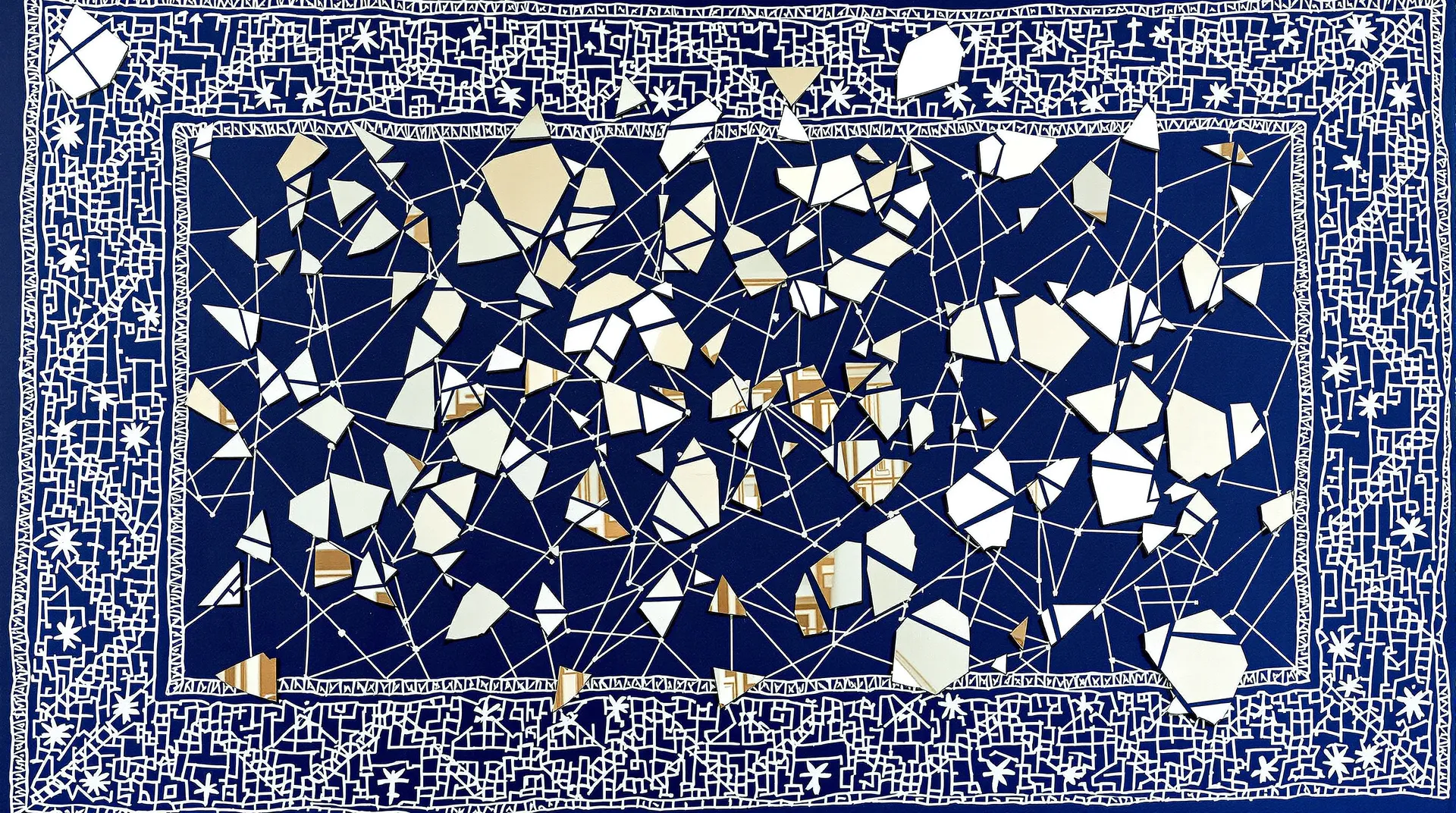
Imagine if every mirror in your home became a disruption screen - not reflecting your face but your cognitive blind spots. Not the spinach between your teeth, but the assumptions calcifying in your worldview. These wouldn't be cruel interventions, more like those moments when a child asks why money exists, or why Tuesday comes after Monday, and suddenly the arbitrary scaffolding of reality becomes visible.
Consider how we've domesticated mirrors into validators of appearance, these glass rectangles that confirm our hair sits correctly, our tie is straight. But what if they showed us instead the last time we changed our mind about something fundamental? Or mapped the distance between our proclaimed values and our browser history? Not as judgement, but as a sibling might - honest without malice, revealing without condemning.
The technology already exists in fragments. Our phones know our patterns better than we do. Algorithms predict our desires before they crystallise. Smart homes monitor our rhythms. Yet we use these capabilities for targeted advertising and convenience optimisation. We've built the most sophisticated behaviour-analysis systems in history and pointed them at selling trainers.
Picture a morning routine where your bathroom mirror shows you've spent seventy-three hours this month consuming content that confirms what you already believe. Or displays the correlation between your stress levels and time spent in particular digital spaces. Not harsh truths but gentle disruptions, like discovering you've been holding your breath without realising.
The purpose isn't self-improvement theatre or productivity optimisation. It's about maintaining cognitive flexibility in systems designed to calcify our thoughts. When we're genuinely surprised, our brains briefly escape their prediction loops. We become permeable to new patterns. These mirrors would be shock absorbers for consciousness – not crisis generators but awareness maintainers.
What if self-reflection literally meant encountering an other self – one assembled from our data shadows, our forgotten searches, our midnight anxieties? Perhaps the real question is whether we fear transparency more than stagnation. Whether comfort has become our highest aspiration. Whether we've confused the mirror's purpose – thinking it exists to confirm rather than confront. What might emerge if every surface that showed our image also showed our patterns? What new behaviours and patterns might then surface?