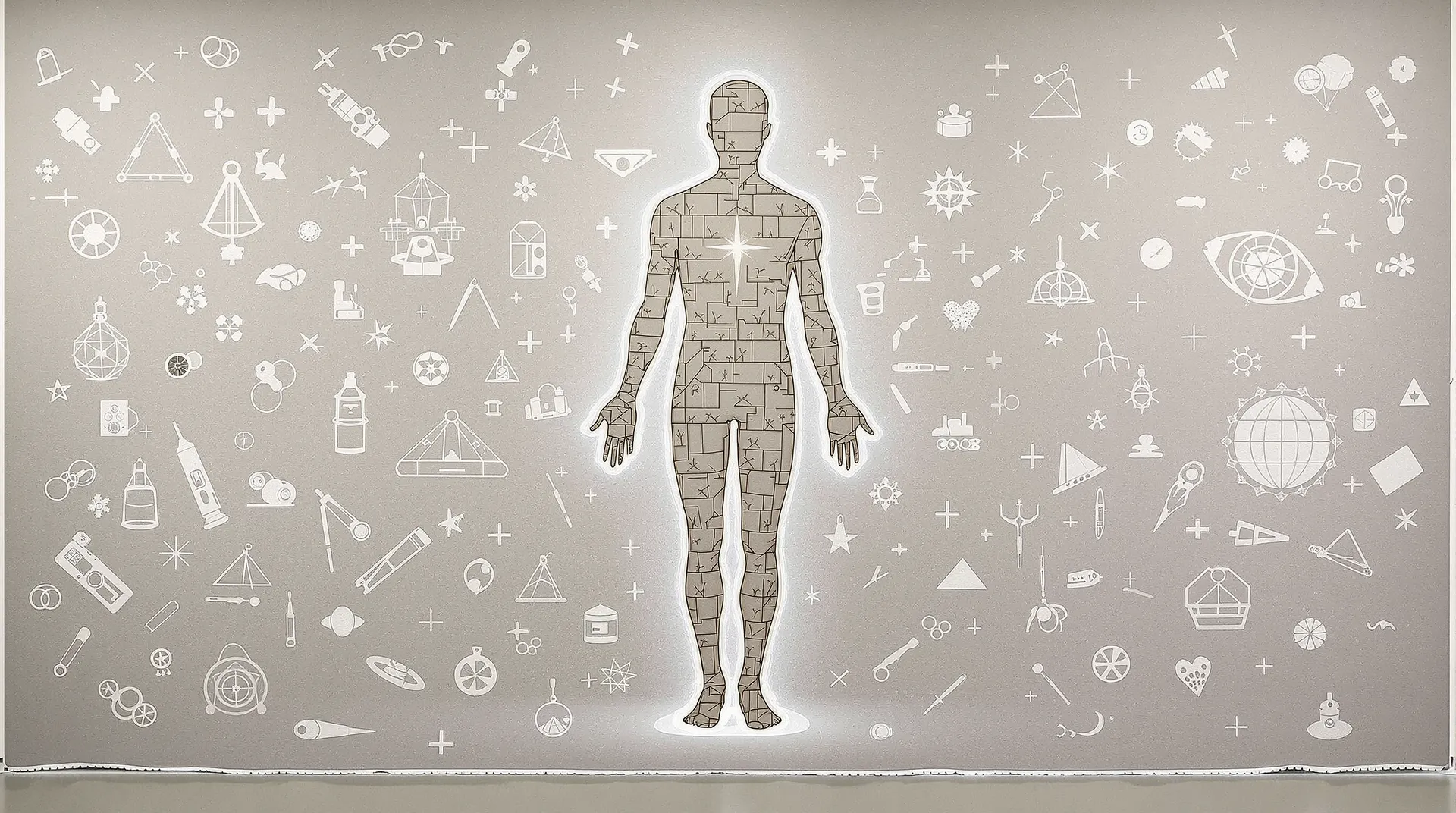
We persistently misread the mind-body connection as predictive mechanism rather than diagnostic instrument—as though emotional patterns generate illnesses through mechanical causality. Like expecting piano keys to produce weather in distant cities, we treat psychological states as switches triggering predetermined outcomes. This linearity dissolves. The connection operates like compass rather than calculator, offering directional insight rather than quantitative prediction.
As diagnostic tool, it reveals how practitioners help by reading calligraphy written across flesh and consciousness simultaneously. Persistent shoulder tension becomes not merely fatigue but possibly responsibility carried too long. Digestive disruption might signal not only dietary choices but difficulty metabolising emotional experiences. The body speaks in dialect requiring translation.
Yet diagnosis demands sophistication we rarely acknowledge. We cannot catalogue discomforts whilst scrolling through amateur psychology and expect insight. Genuine diagnosis requires articulating experience with someone trained to listen without becoming entangled—maintaining therapeutic distance whilst offering complete presence. We need minds functioning as mirrors rather than participants, reflecting patterns without imposing distortions. Good psychologists cultivate this: holding space simultaneously empty of investment yet completely attentive. Most listeners cannot achieve this