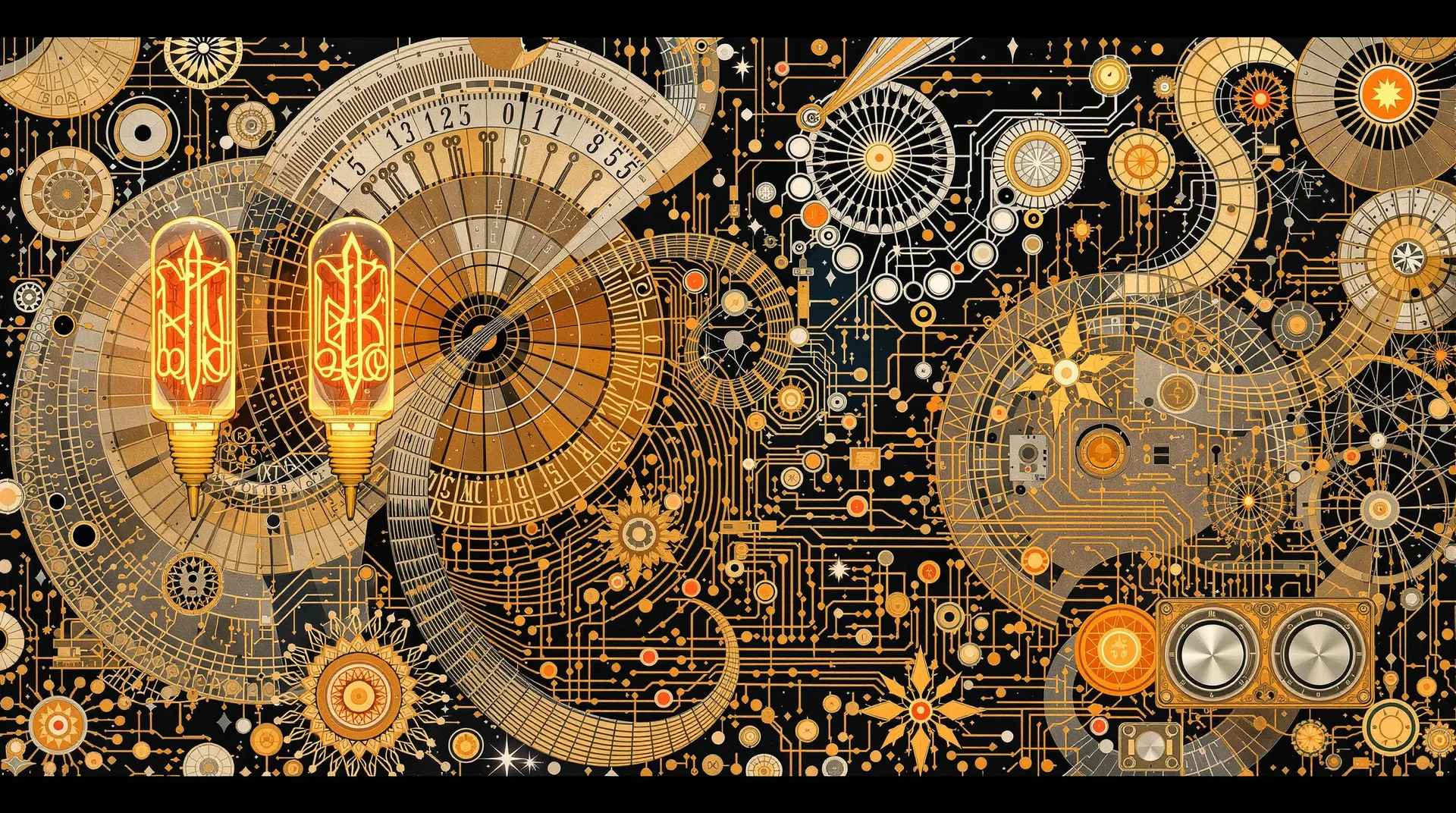
Inheritance begins before the will is written. We arrive pre-loaded with ancestral software, entire operating systems humming beneath consciousness. These aren't files we can simply delete—they're foundational code written into our biochemical architecture.
Think of genetic inheritance as receiving a vintage radio that only picks up certain frequencies. The voices emerge unbidden—grandfather's stubborn optimism crackling through static, grandmother's anxiety broadcasting on repeat. Sometimes you lean into the reception, grateful for the guidance. Other times you search for the off switch that doesn't exist.
The peculiar thing about inherited traits isn't their presence but their persistence. They function like background applications consuming memory, running processes you didn't authorise. Your mother's laugh escapes through your throat during inappropriate moments. Your father's frown settles across your features during meetings. These aren't choices—they're involuntary downloads from a shared genetic cloud storage system.
Here's where it becomes fascinating: resistance shapes identity as much as acceptance. The child who rebels against inherited pessimism develops fierce optimism. The one who fights genetic introversion becomes deliberately social. We become ourselves through negotiation with our pre-installed programming, debugging inherited functions whilst writing new ones.
Meeting someone's parents reveals the source code in startling clarity. Suddenly their quirks make sense—not as personal failings but as inherited features working exactly as designed. That nervous laugh? Version 2.3 from maternal lineage. The way they organise their workspace? Paternal productivity protocols running three generations deep.
We imagine ourselves as self-made individuals, but we're more like collaborative albums where multiple generations contribute vocals. Some tracks harmonise beautifully. Others clash with deliberate dissonance. The challenge isn't escaping this inheritance but learning to remix it consciously.
Some voices deserve amplification. Others require careful volume control. The art lies in becoming the mixer of your own genetic soundtrack rather than its passive listener, learning which frequencies to boost and filter out.
Which inherited voices deserve the loudest speakers in your identity? How do we honour ancestral wisdom whilst muting ancestral wounds? When does genetic inheritance become creative collaboration rather than involuntary burden?