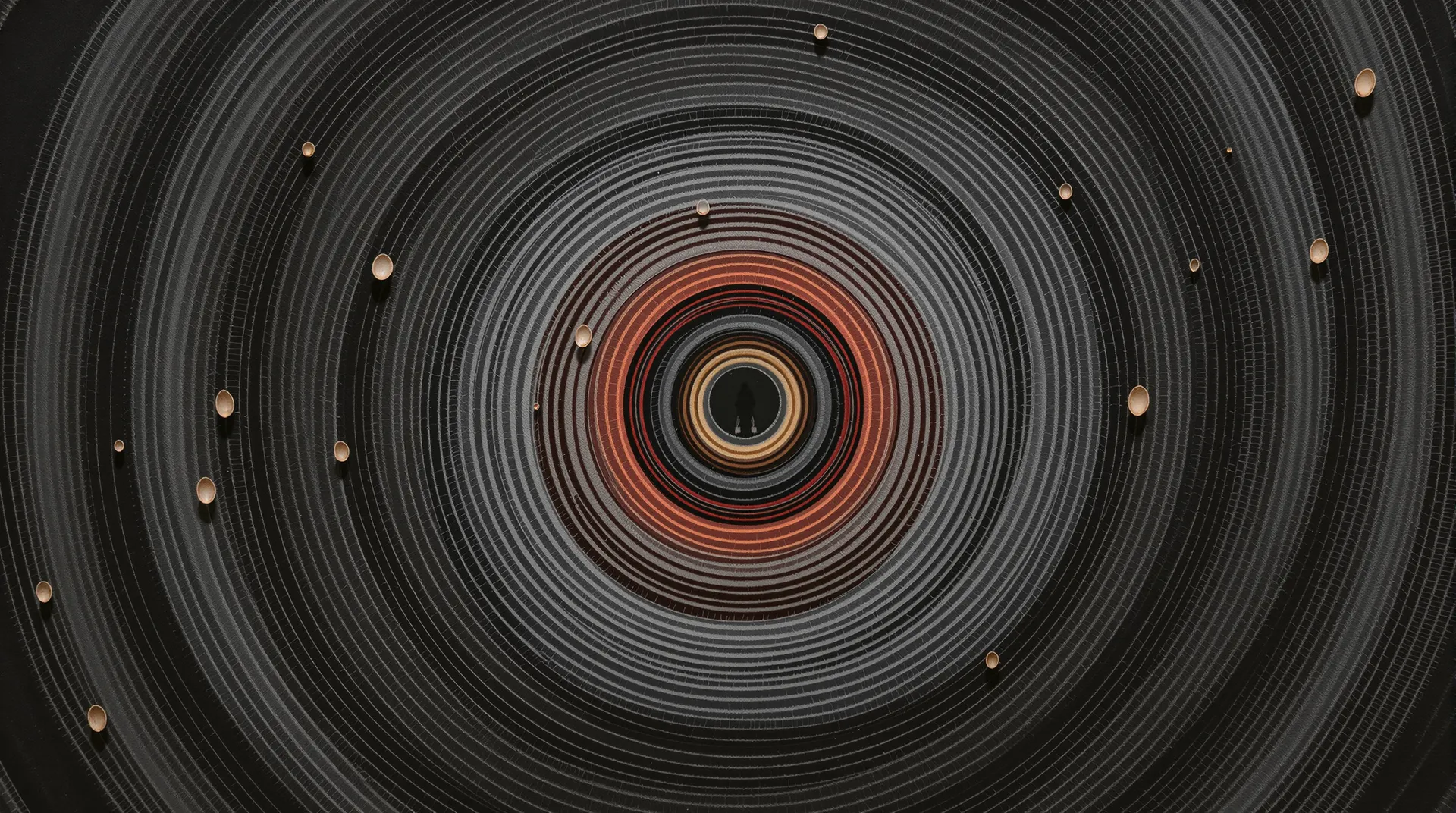
Of all pollutions, darkness seems simplest to overcome. Close your eyes and darkness arrives. But try closing eyelids in a bright room—they never fully dark. Excess light qualifies as pollution because it affects those who don't want brightness. We sense light through our entire body.
Ambience operates as something stranger than brightness-level. A bookbinder judges paper through resistance grain offers when folded, crispness of edge, whisper of lifted sheets. That tactile knowledge emerges from thousands of encounters. Ambience constitutes signals our bodies register before minds categorise them.
Light pollution eliminates what darkness makes legible. Plants synchronise flowering with lunar cycles invisible under streetlights. Nocturnal insects—moths, beetles, fireflies—organise existence around darkness gradients that artificial lighting obliterates, disrupting pollination networks evolved when light withdraws.
Yet conversation focuses on astronomy. We mourn lost Milky Way visibility as aesthetic deprivation. This misses the systemic issue. Excess illumination represents a category error about necessary infrastructure. We've decided brightness equals progress, eliminating shadow demonstrates advancement, without investigating what flourishes in darkness's absence.
Cities justify illumination through crime prevention arguments rarely evidenced. Research shows lighting correlates weakly with safety. But municipalities install brighter fixtures, chasing security theatre serving commercial interests—retailers extending hours, developers marketing "well-lit" properties, energy companies selling kilowatts.
The infrastructure becomes self-justifying. Once neighbourhoods install intense lighting, residents adapt around it. Proposals to reduce illumination encounter resistance. The light exists because the light exists.
Shopping districts eliminate shadow, engineer soundscapes maintaining energy, regulate temperature preventing lethargy. Spaces where rest becomes impossible, conditions permit only motion and purchasing. Mood isn't authored individually