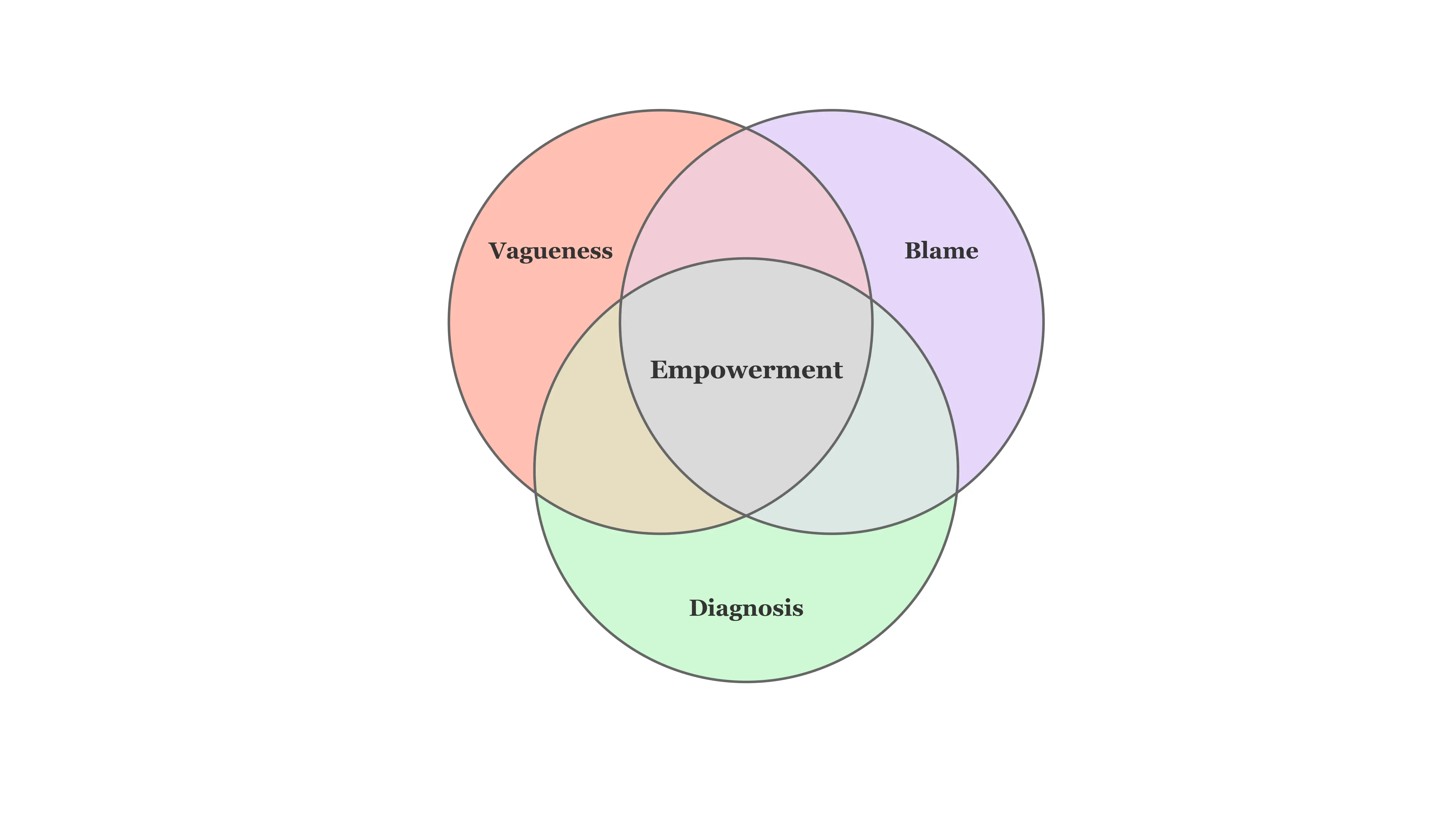
Design critique has become an exercise in making designers feel bad rather than helping them design better.
Don Norman established that "intuitive" describes a relationship, not a property—it matches existing mental models. This shifted blame from users to design. But Norman addressed fault attribution. Designers need something more: critique that engages with the choices they made and the reasons behind them. Most design critique fails this spectacularly.
Every design emerges from a sequence of decisions, each made for reasons that seemed sound at the time. A designer chose that navigation pattern because it worked in a previous project. They prioritised visual consistency over task efficiency because brand guidelines demanded it. They assumed users would arrive from a specific entry point because analytics suggested that flow. These choices form a chain of reasoning—and somewhere in that chain, something diverged from what users needed.
Vague critique ignores this chain entirely. A reviewer declares a checkout flow "confusing" and the designer returns to their desk with nothing to work with. Confusing how? Because information hierarchy contradicts scanning patterns? Because they prioritised aesthetic minimalism over functional clarity? Because they assumed familiarity with screens first-time users won't possess? Each diagnosis points to different choices made for different reasons. The vague verdict addresses none.
Effective critique traces the design process and identifies where specific choices diverged from user needs. Perhaps the designer emphasised branding over task completion—a reasonable choice that conflicted with user goals. Perhaps they assumed a mental model users don't hold. Perhaps they optimised for edge cases at the expense of common paths. These observations engage with the designer's reasoning without inducing guilt or shame. They identify wrong turns in the process, creating clear routes for revision.
Design education produces designers but rarely critics who can read design decisions. We teach composition, colour theory, interaction patterns, user research. We do not teach how to reconstruct another designer's reasoning and locate where it went astray. The result is critique that defaults to impression rather than diagnosis.
Design critique should engage with why designers made the choices they did, not just what those choices produced. Have you received critique that addressed your reasoning, or only your results?
#DesignCritique #UXDesign #DesignFeedback #ProductDesign #DesignEducation #UserExperience #DesignProcess #TechCulture #DigitalDesign #DesignThinking