We judge ideas constantly—proposals at work, student projects, design concepts. Yet most evaluation operates through taste disguised as analysis. Someone presents a concept and you respond "I don't think this works," believing you've engaged critically whilst merely broadcasting preference.
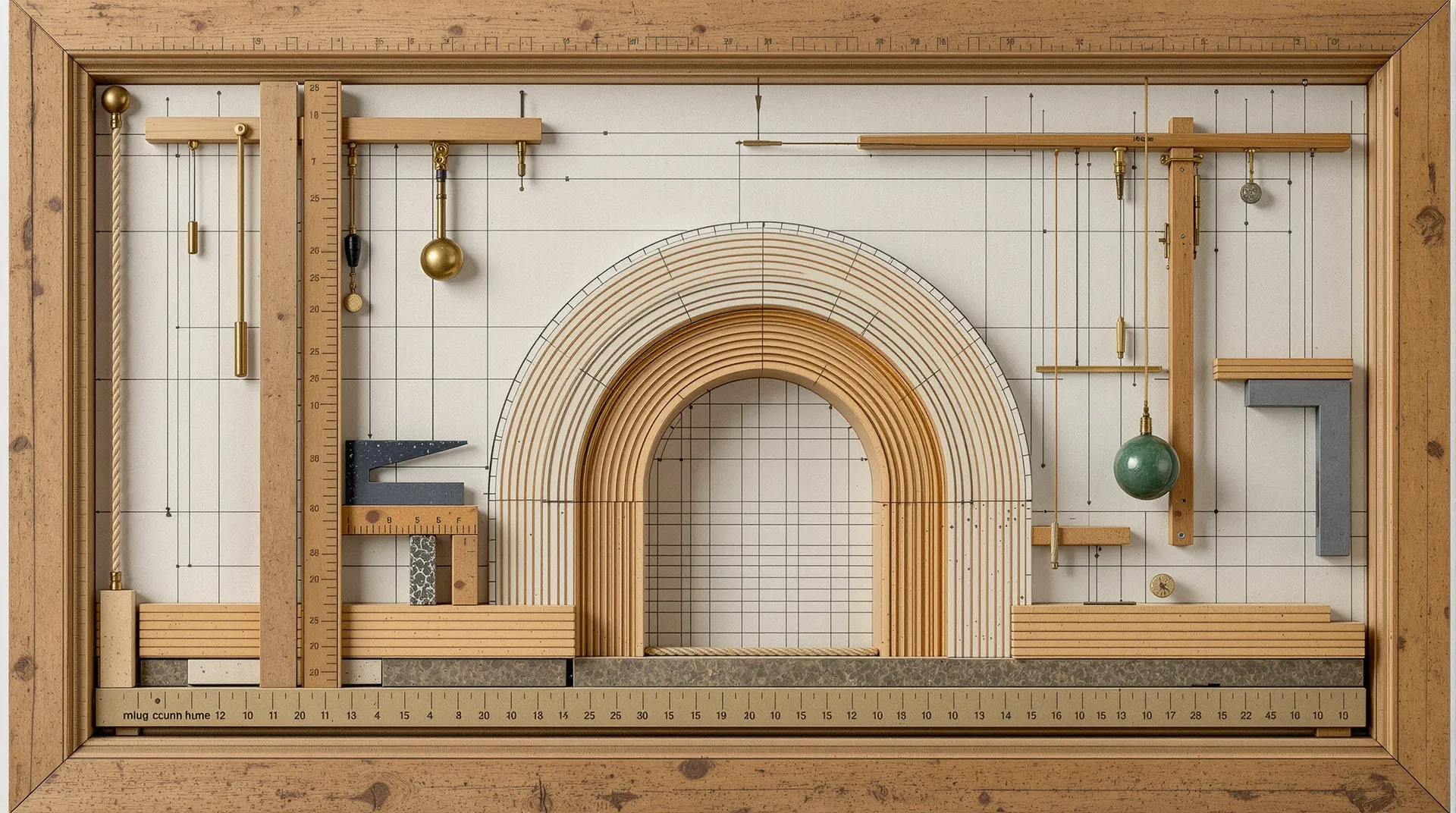
Real judgment requires distinguishing structural coherence from aesthetic appeal. When stonemasons assess arches, they examine whether each voussoir transfers compressive load correctly, whether the keystone prevents lateral thrust from buckling the structure. An exquisite arch that collapses under its own weight fails fundamentally.
This reveals judgment's architecture: coherence precedes taste. Before asking whether you find something appealing, ask whether its internal logic holds.
Design concepts expose confused judgment. Someone proposes an interaction pattern and responses scatter: "feels too complicated," "users won't understand." These assessments masquerade as analysis but operate through personal comfort zones.
Proper validation traces causality. If this interface component triggers that user action, leading to this system response—does each step follow? Are there gaps where the designer assumes behaviour without mechanism?
When luthiers inspect stringed instruments, they check soundboard thickness gradation, bridge foot placement relative to bass bar positioning. An instrument might display masterful inlay work but produce dead tone because the maker miscalculated wood grain orientation against string tension.
Educational systems rarely teach this distinction. Students voice opinions without establishing whether the thing possesses internal coherence. Critique sessions become taste Olympics where the most confident voice wins.
Cartographers develop error detection—they recognise when elevation contours violate hydrological principles, when coastal features contradict tidal patterns. This acuity comes from tracing causality through geographical systems.
We need equivalent training for conceptual systems. The ability to trace logical chains without inserting personal preference. To identify where an argument's structure fails versus where it produces conclusions you find uncomfortable.
Most concepts die not from structural failure but from assassination by taste. Someone presents logically sound reasoning and observers respond "but I don't like where this leads."
A paper exploring these ideas through an interactive Design Concept Validator is currently underway—a system where proposed concepts must literally support their own logical weight.
Can we cultivate judgment that examines coherence before imposing preference? What becomes possible when we stop mistaking our reactions for evaluation?