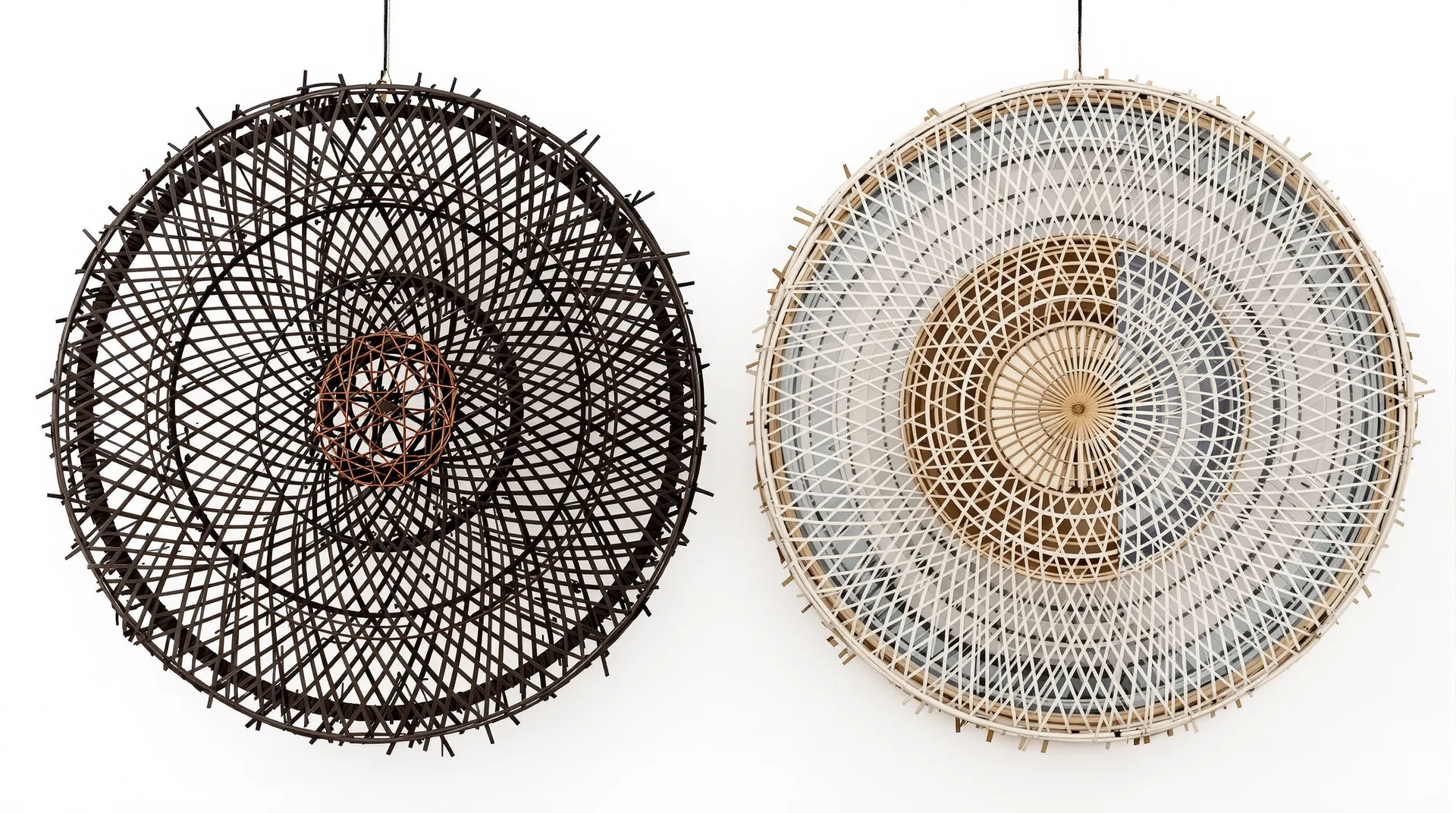
Cables form the fundamental logic of how our world works. Not the physical objects, but the protocol—the assumption that connection requires hierarchical pathways. Even wireless connections operate on cable logic: master-slave hierarchies preventing genuine peer-to-peer spontaneity.
Consider how crystals form. Each molecule locks into precise lattice positions, creating structures permitting no improvisation. The lattice admits only what fits predetermined angles—connection through conformity to fixed protocols.
Yet enzymatic reactions operate differently. An enzyme recognises its substrate through complementary contours, flexing to accommodate variations. Connection for change, not subordination.
We've built social infrastructure on crystalline assumptions. Connecting with someone should follow different logic than connecting devices. Different people come packaged differently. Their appearance and the content their presence delivers bear no correlation. We cannot specify connection preference logic as precisely as privacy settings.
For things, configuration suits individual preferences. A device authenticates or doesn't. But people resist binary assessments. They arrive carrying complexities no authentication handshake could capture—histories contradicting presentation, capacities emerging through sustained interaction.
The cable metaphor colonises how we imagine connection. Dating platforms demand network administrator precision: height ranges, education levels, political affiliations. As though human resonance operated like port configurations, intimacy optimised through filtering. We're applying crystalline logic to enzymatic phenomena.
What we call "chemistry"—that inexplicable recognition, fitting despite surface incompatibility—suggests connection protocols we've barely begun to articulate. Not rigid lattices of predetermined compatibility, but something like tidal locking: two bodies gravitationally bound, synchronising through sustained proximity rather than instantaneous verification.
The hunger for genuine peer-to-peer connection reveals what cable thinking excludes. Some resonance emerges only when we abandon the assumption that someone must control configuration, recognising profound connections form through principles we cannot encode.
Can we design our personal connection infrastructure distinguishing connections requiring rigid protocols from those demanding flexible recognition? Does our inability to specify connection preferences reveal limitation or essential quality? What becomes possible when we stop treating connection as configuration?