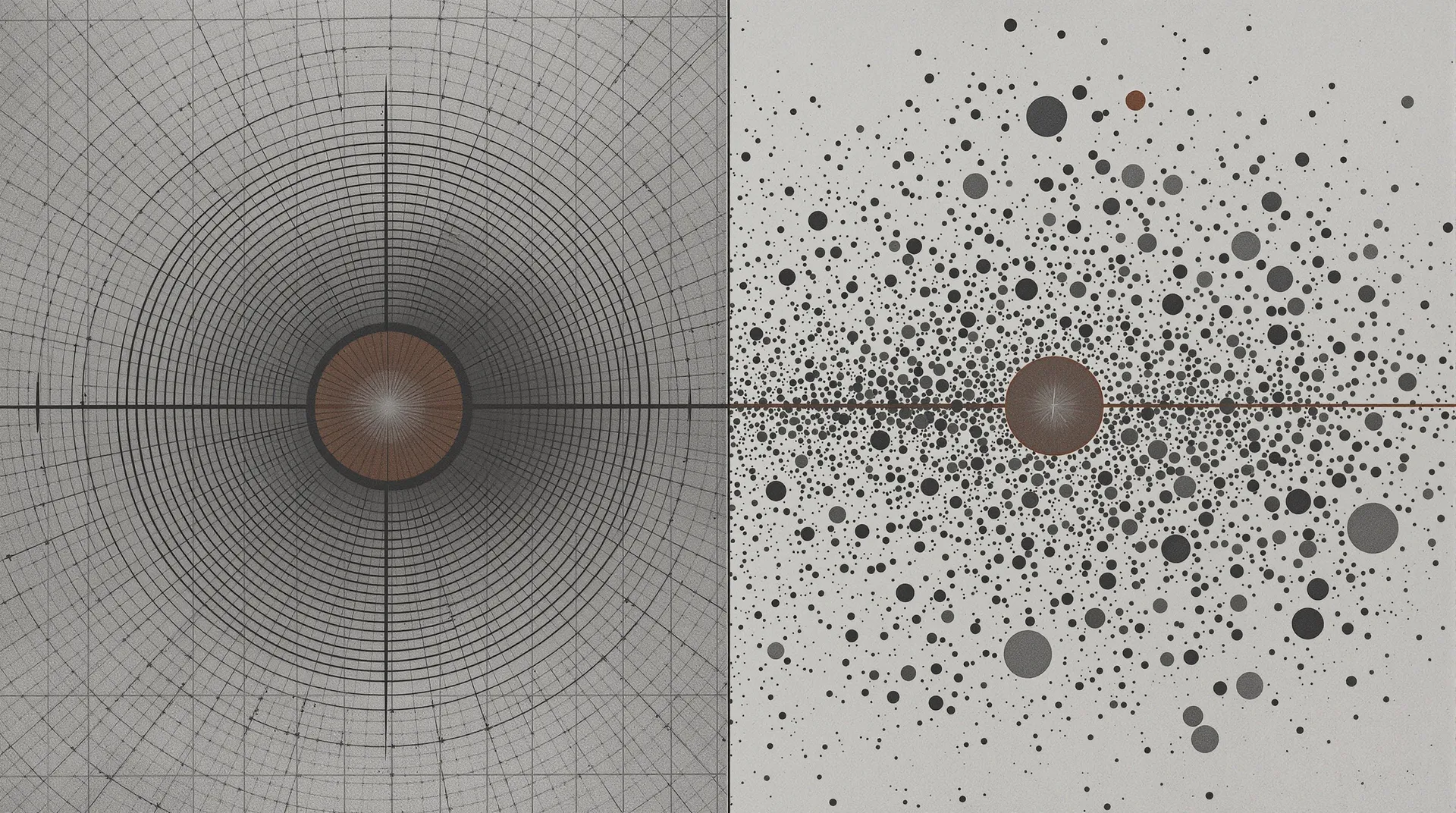
Magnets stick to metallic surfaces because of their material properties. The reasons behind the orchestrations in our social relationships are, on the other hand, unknown. Not totally unknown—but explaining our social preferences requires more than personality attributes captured from our behaviour. Even people who by all rational parameters should not get along actually do so in real life. People like strange things in others for reasons that resist quantification.
We are fixated on intelligence as if it were very rare and unexplainable. But it is not. Engagements with animals or infants are beautiful and memorable not for intelligent exchange but for other reasons entirely. There exists a quality of presence operating independently of cognitive capacity, a magnetism drawing us towards certain beings whilst repelling us from others, following no algorithm.
The problem with digital simulations of natural states is that they try to simulate all aspects, even the ones they do not understand. These simulations end up being too perfect, even in their simulation of unreliable, inconsistent, and wavering phenomena. They produce flawless imperfection, meticulously calculated spontaneity. The simulation betrays itself through its competence.
We build matching algorithms assessing compatibility through data points—interests, values, communication styles, life goals. Yet these systems produce relationships that collapse whilst others that should never work somehow endure. The algorithm accounts for everything it can measure and remains blind to everything that matters.
If we were on a deserted island with some highly intelligent person, after some time we would want to ration our time with them, seeking another quality of presence. Intelligence exhausts itself through its own brilliance. We need presence that doesn't perform, connection that doesn't optimise. We need the unmeasurable remainder, the part of encounter dissolving when observed closely.
We need new frameworks to characterise digital behaviour—some focused on intelligence, others on different aspects of life. We continue building systems that simulate attraction whilst remaining unattracted, that model connection whilst staying disconnected, that speak about intelligence whilst demonstrating little wisdom.
How do we design for qualities we cannot name? What becomes possible when some forms of resonance resist analysis? Can we build technologies honouring the unmeasurable without attempting to measure it?