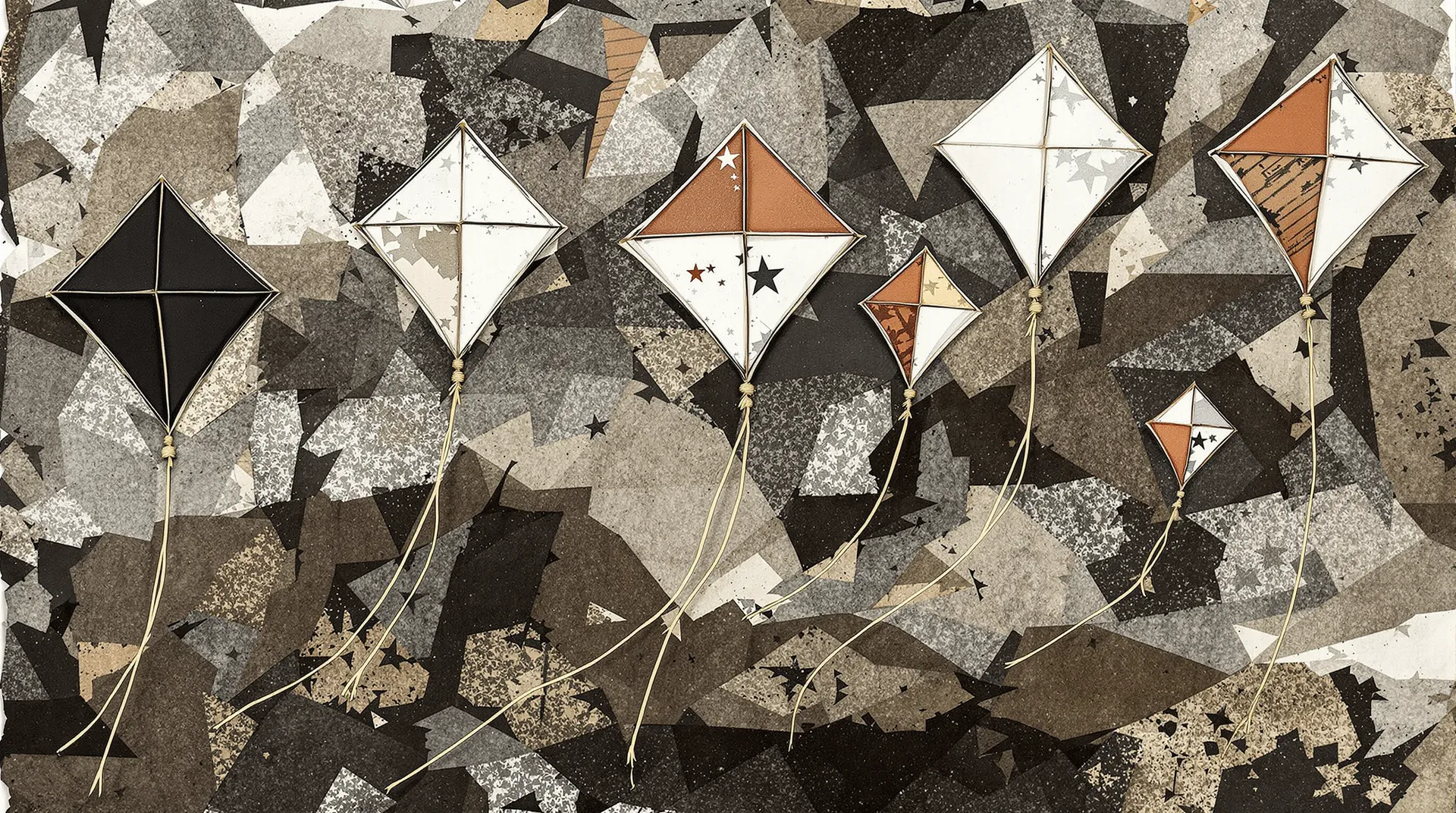
Being an anchored kite is like possessing wings whilst choosing to remain tethered. Yet absolute freedom might be the heaviest constraint of all. Why would anyone choose to remain on a leash? Because constraint offers sustainability. We cannot deal with the constant demands of freedom. Absolute liberty demands knowing what to do in every single moment, with no auto-pilot, no cushion, no playground where mistakes remain hypothetical.
Being free resembles standing on a shooting range, except you are not shooting mock-people but actual living beings. Who deserves to live? Who deserves to die? Without any framework, you must still decide. The trigger does not wait for ethical clarity. Every moment of pure freedom becomes a moment of irreversible consequence, and consciousness cannot bear that weight continuously without fracturing.
Not being free proves equally desirable. The anchored kite flies within boundaries that enable rather than prevent flight. Without the string providing tension and direction, the kite does not achieve liberation—it simply collapses. The constraint creates the condition for soaring. Remove the tether entirely, and what appears like freedom becomes formless drift followed by inevitable descent.
Yet this is not an argument for paralysis, for living so safely that fear of freedom itself becomes the cage. Living means balancing two risks: the impossibility of meeting freedom's relentless demands against the frustration of discovering the leash permits less drift than we can tolerate. We are perpetually torn between these opposing dissatisfactions, neither of which offers comfortable resolution.
Each of us must configure our own unique calibration. The degree of freedom we can sustain without fracturing differs radically between persons. What feels like liberating flight to one constitutes overwhelming vertigo to another. What registers as secure anchoring to one becomes suffocating restraint to another. There exists no universal formula, no prescribed length of string that serves all kites equally.
Can we bear recognising that our deepest freedoms emerge precisely from our willingness to accept certain constraints? Does mature living require discovering our singular calibration point—that unique tension between freedom's demands and constraint's comfort where we can sustain flight without shattering? What if wisdom lies not in resolving this tension but in learning which degree of tautness lets us soar whilst remaining intact?