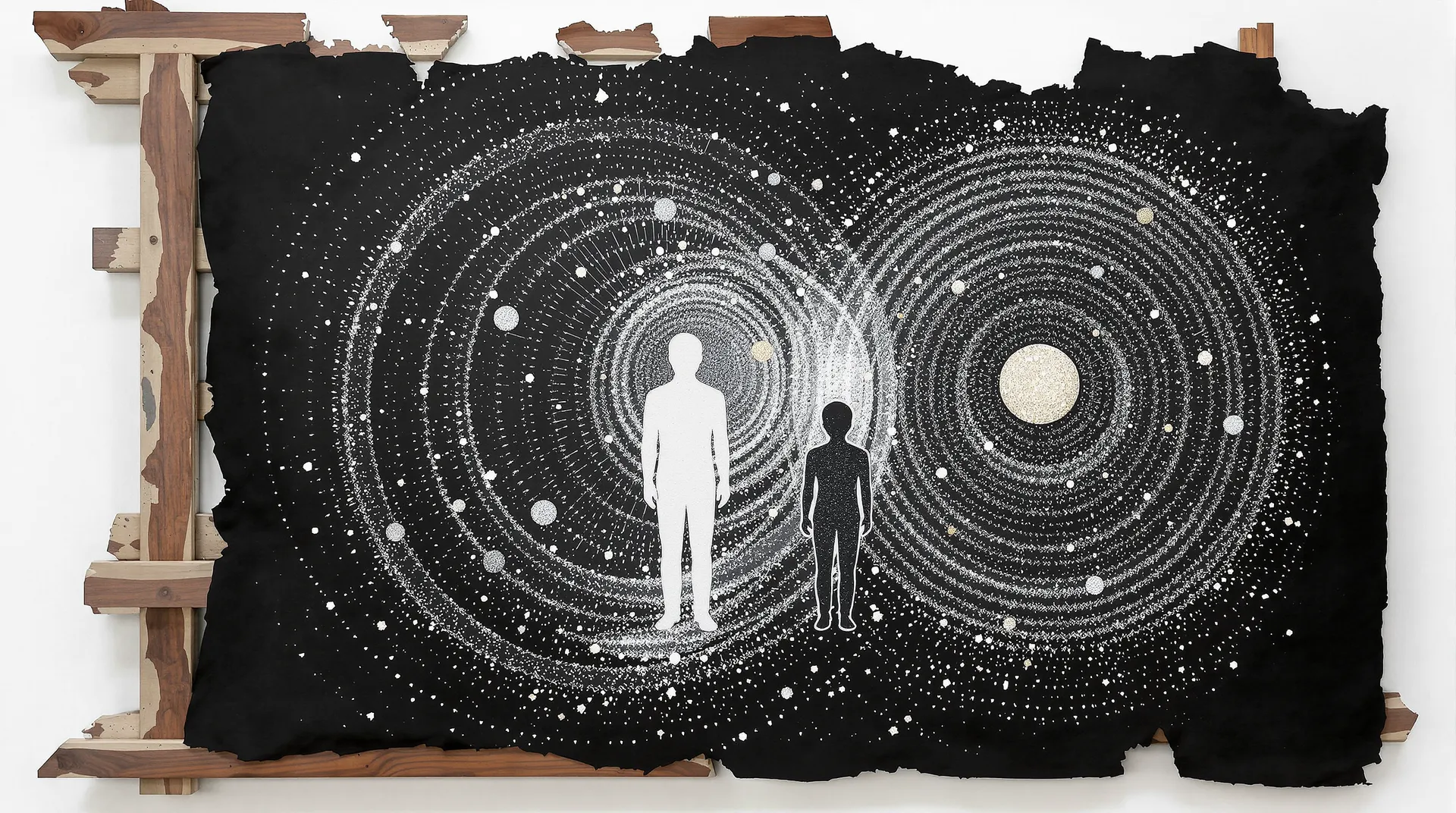
We have two kinds of moods. One is visible and obvious and the other is invisible and under the radar. The invisible kind can only be sensed through presence. When we meet virtually, we hide how we're really feeling because we only show our face. We smile but sometimes we are crumbling within.
This disconnect reveals something fundamental. Physical co-presence operates through channels we rarely acknowledge, evolved over millennia. The quality of silence in a shared space carries information no microphone transmits. Tension or ease in someone's posture speaks without translation. These ambient signals function below conscious awareness, yet shape our understanding profoundly. Virtual encounters strip away these layers, reducing human complexity to what fits within a frame.
I ask my students a question that makes this clear. If you are sitting in a dark room, do you know if someone is there? Some people cannot tell. But isn't that a problem?
The question exposes a crucial absence. Those who cannot detect another's presence in darkness have lost access to an ancient form of knowing. We evolved to read breath patterns, to sense air movement, to register occupied versus empty space. This capacity represents more than perception