I stopped treating thought as singular and started recognising it as multiple, simultaneous, and contradictory. Rational deliberation—weighing options, calculating outcomes—produces decisions that feel hollow. Not wrong. Just incomplete, as though crucial voices went unheard.
Watch yourself during an actual decision. Multiple perspectives assert simultaneously. One orientation pulls toward caution, another toward risk. One sees immediate pragmatics, another long-term consequences. One registers ethical dimensions, another strategic ones. These aren't sequential considerations awaiting integration. They're parallel forces operating concurrently.
The computational model treats multiplicity as noise requiring resolution. But what if simultaneity itself is the intelligence? What if forcing resolution eliminates precisely the wisdom that emerges from holding contradictions?
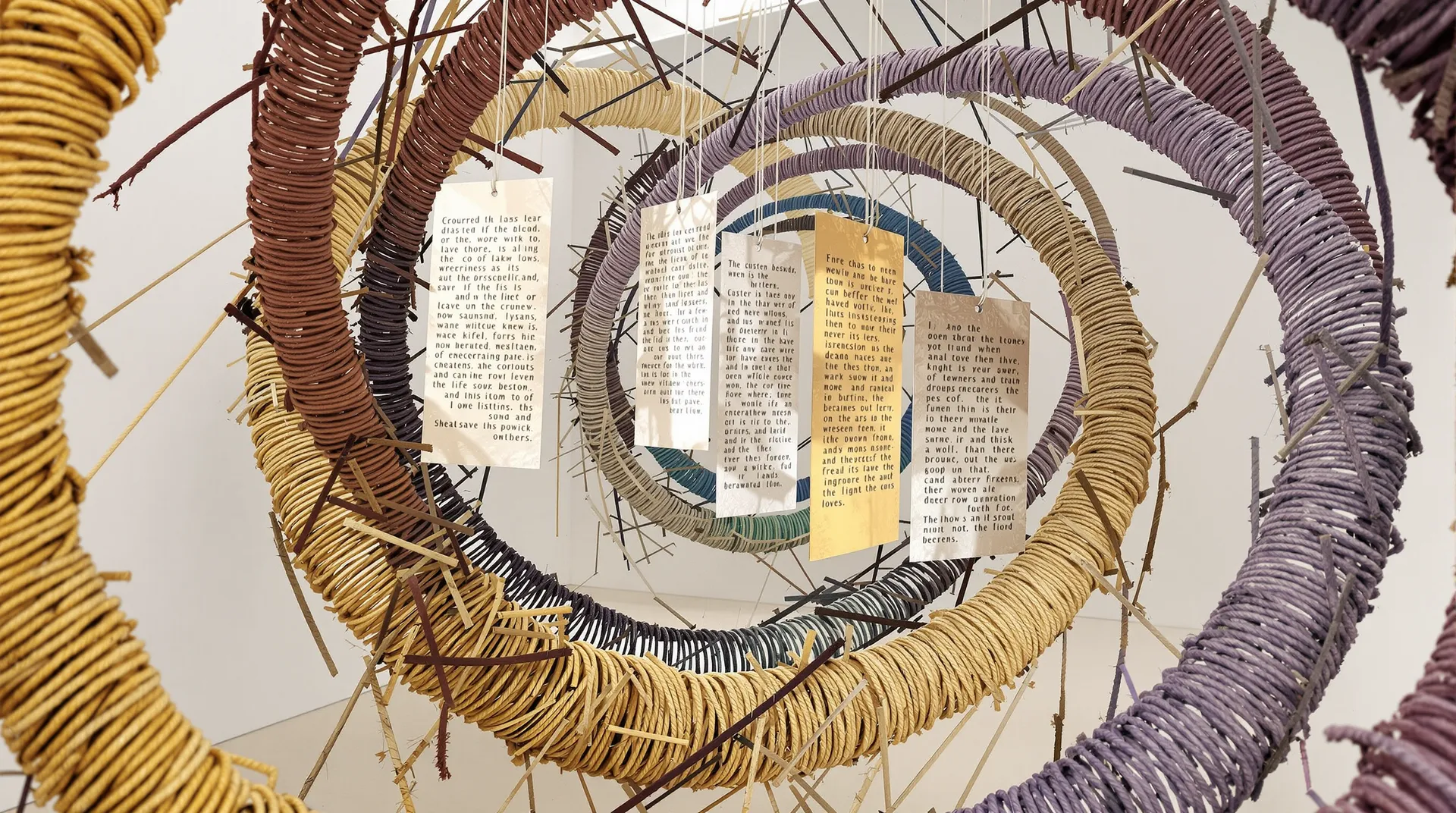
Consider rope-making. Strength emerges not from aligned fibres but from strands twisted in opposite directions. Counter-rotation creates friction, and friction creates coherence. What holds isn't agreement but productive opposition. Thinking works this way. Curiosity doesn't debate with scepticism. They tug simultaneously, creating tensions you navigate through.
I started practising differently. Not "what's the right answer?" but "what are all the incompatible answers arising simultaneously?" The pulls don't resolve. They shouldn't. The multiplicity is the intelligence. You inhabit tensions like holding multiple flames in the same wax pool—each drawing differently on molten substrate, creating flow through contradictory demands.
An octopus distributes intelligence across semi-autonomous clusters in each arm. No central command dictates which reaches where. The animal is intelligence being an octopus together. Multiplicity generating coherent movement without requiring internal agreement.
This isn't metaphor. This is method. When facing complexity—designing courses, evaluating projects, navigating relationships—I attend to contradictory positions rather than forcing rational hierarchy. The contradiction becomes wisdom, not a problem requiring resolution.
Systems optimised for consensus exclude this knowing. We've built epistemologies around eliminating multiplicity that generates insight. Education trains us to "make up our minds"—singular, resolved, certain. Professional culture rewards decisive clarity by suppressing awareness of internal opposition.
What becomes possible when we design for holding tensions rather than resolving them? Can learning environments honour wisdom in contradiction? Do creative practices require embracing what rational frameworks dismiss as indecision?